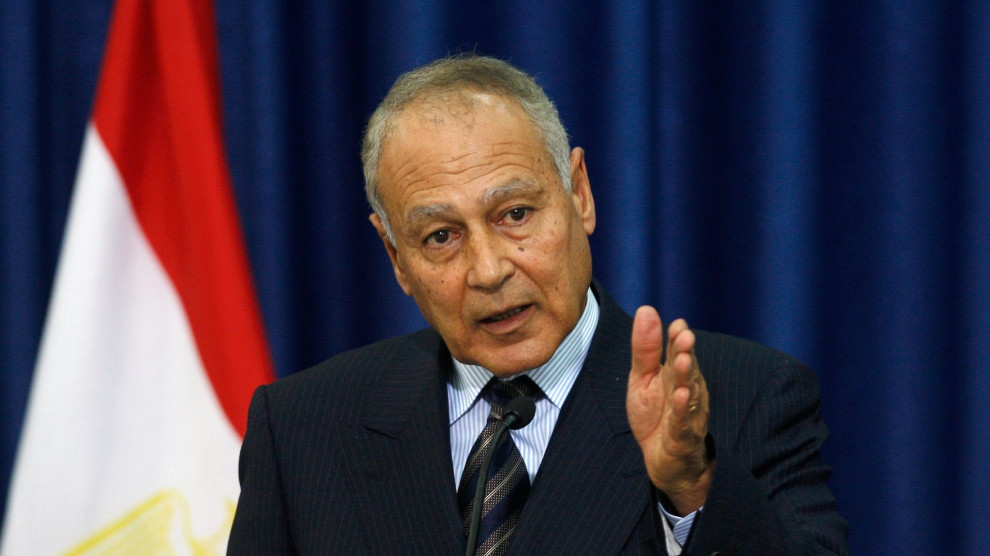
SPEECH OF H. E. MR. AHMED ABOULGHEIT SECRETARY GENERAL OF THE LEAGUE OF ARAB STATES At the Global Buku forum
alhadath – cairo
Ladies and Gentlemen
We are going through tense times. In a super-connected world, crises breed crises. People, the world over, are wary of what the future might hold. Uncertainty is the name of the game. Anxiety and fear could lead to bad judgement and poor decision-making. That is exactly how crises turn into disasters.
When times get difficult on the international arena I prefer to look back to figure out the way forward.
Times of crises test our wisdom, and our sense of history. Statecraft is the art of reading the future through the lens of the past.
The history of the modern World order holds one ominous warning that kept repeating itself time and again: never take peace for granted.
Peace is not the natural state of affairs. It has to be achieved and sought after. It is largely a product of clever statecraft and accumulated historical wisdom.
When peace is taken for granted, wars are more likely to break out. It takes a moment to ignite the spark of a war, but it takes years and decades to create the circumstances that lead to such moment. I think it took Fifty years to prepare the ground for World War1, and just four days for the powder keg to explode.
Now we know it was an unnecessary war. Leaders, as they were described later, were sleepwalking. It was an utter failure of statecraft, and it did not solve anything, paving the way for another World War that was even more devastating.
Only wisdom and a sense of history led to the peace that prevailed after the second World war. Peace was not comprehensive nor flawless, but was good enough. It was not achieved between countries who shared the same ideology or an identical worldview. It was not built on lofty ideals, but rather on realpolitik and the balance of power.
I do think that the number one threat to world peace remains unchanged since the Napoleonic wars in the early 19th century. It is great power competition, and it is pretty much easy to see why.
The war in Ukraine is a case in point. its knock-on effect is deeply felt all over the world. When great powers are engaged in conflict the whole world is engulfed, one way or another, in the fight.
And when great powers fail to find common ground or agreed-upon rules of behavior in the international affairs, it becomes increasingly difficult to achieve progress in dealing with any of the global challenges facing the world.
We should not sleepwalk, once again, to the abyss. Diplomacy and statecraft need to take center stage. The stakes of global wars in a nuclear age are immensely higher than any time before in history. Historical wisdom should guide us to find the right balance.
It would not be easy, and it will take time and human ingenuity. Nevertheless, I am sure that, out of the seeming chaos and disruption, a new balance will emerge to save the world from the trap of repeating history.
Thank you.
 +00000000